The "Lived-In" Look: Why Imperfection is Your Best Sales Tool
In the high-stakes world of real estate development, the goal of a 3D render has traditionally been "perfection." For years, we’ve seen clinical, museum-like spaces with perfectly smooth surfaces and not a single item out of place.
But as we move through 2026, a new trend “Cinematic Storytelling” is proving that "perfect" can actually be a barrier to a successful sale.

The Problem with "Digital Fatigue"
Today’s buyers are visually overwhelmed. They can spot a "standard" CGI from a mile away. When a render looks too sterile, it feels unattainable and, more importantly, unbelievable. If a buyer can’t picture themselves actually living in the space, they won't form the emotional connection necessary to sign a contract.
At Arc & Sphere, we’ve noticed a clear trend: the renderings that close deals aren't the ones that look the most "polished", they are the ones that feel the most “real”.
The Psychology of "Organised Chaos"
When a potential buyer looks at a 3D visual, their brain is doing more than just measuring the ceiling height. They are subconsciously asking: “Can I see myself here on a Sunday morning?”
A sterile, empty room can’t answer that question. A room with “Organized Chaos” can. By layering in deliberate "imperfections," we move past architecture and start telling a story:
The Morning Narrative: A half-full coffee cup on a marble countertop with a faint steam trail.
The Evening Softness: A discarded linen throw over the arm of a sofa and a book left open on a side table.
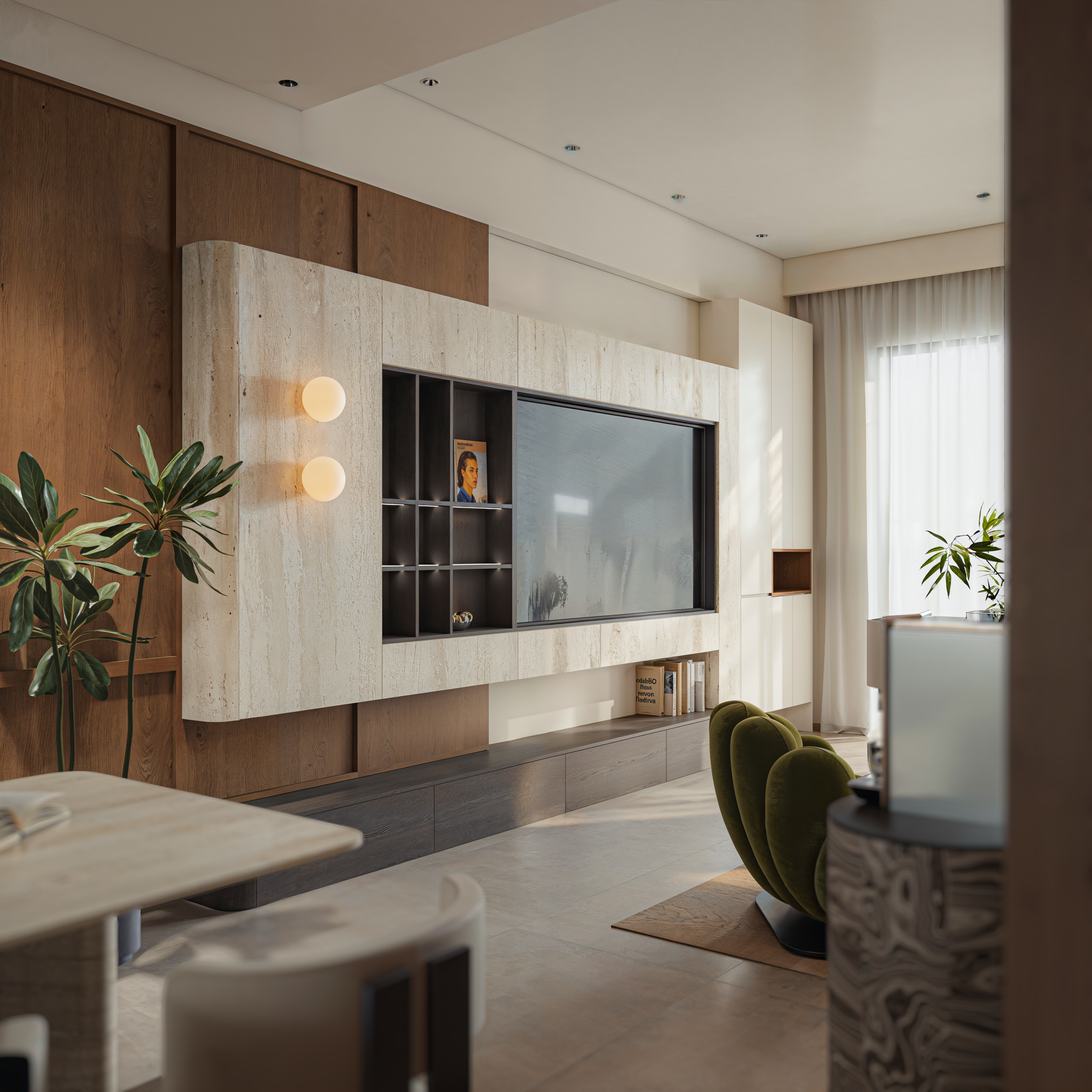
The Atmospheric Touch: Sunlight hitting dust motes in the air or a slight "glare" on a camera lens, just like a real photograph.
These aren't "clutter." They are emotional anchors. They bridge the gap between a digital 3D model and a place someone calls home.
Why Imperfection is a Competitive Advantage
In a crowded market, every developer has a high-quality render. But to truly stand out, you need Atmospheric Authenticity.
1. Humanizing the Architecture
Architecture is meant to be inhabited. When we render "lived-in" details, we emphasize the functionality of your design. A kitchen doesn't just have "premium appliances"; it has a workspace where a meal is being prepared. This humanizes the scale of the building and makes large spaces feel intimate and approachable.
2. Building Subconscious Trust
Hyper-perfection can actually trigger skepticism. If a render looks too fake, the viewer wonders what the real building is hiding. By including realistic textures like the subtle grain of wood, the slight crease in a leather chair, or the way natural light catches dust in a sunbeam, we actually create a sense of honesty. It feels like a photograph of a real place, which builds immediate trust in the project.
3. Lighting as a Storyteller
In 2026, we’ve moved beyond "flat" lighting. We now use Cinematic Lighting to mimic the mood of different times of day. A bedroom rendered in the soft, blue-gray light of dawn feels entirely different than one rendered in the harsh midday sun. We choose the lighting that best suits the "vibe" of your target demographic.

The Arc & Sphere Philosophy: Through a Human Lens
While 2026 offers more automated tools and AI shortcuts than ever, there is one thing a machine still can’t replicate: intent. A computer can fill a room with furniture, but it doesn't understand how to "craft the vibe" of a rainy afternoon in a London townhouse versus a sun-drenched morning in a Sydney penthouse.
At Arc & Sphere, we don’t just process architectural files; we act as digital story tellers and cinematographers. We look at the flow of light, the weight of materials, and the placement of every "Organised Chaos" element with a specific goal in mind: making the viewer feel something.
Technology provides our toolkit, but our human eye for aesthetic gives your property its soul. In a market saturated with generic, batch-produced visuals, we provide the bespoke touch that turns a digital file into a high-value emotional asset.
Ready to bring your project to life? Let’s connect to discuss how we can bring a "Human Lens" to your next development.